
Introduction
The Quasar was designed around a single principle: eliminate the variables that compromise acoustic consistency. Internal geometry, port tuning, glue-only joinery, two-axis bracing — every decision was made so the cabinet behaves as a controlled, predictable acoustic structure.
That standard, applied consistently, eventually pointed at something sitting right in front of the speaker.
Grill cloth and frequency response
Grill cloth is standard across the industry, and for understandable reasons: it protects the driver, presents a clean face, and it works. At launch, the priority was the acoustic architecture — and that foundation delivered.
As the product matured and the internal standard got sharper, the question shifted. Not “is this acceptable?” but “is this the best we can do?”
For a cabinet built on acoustic precision, the answer was to go further.
What cloth does to the sound
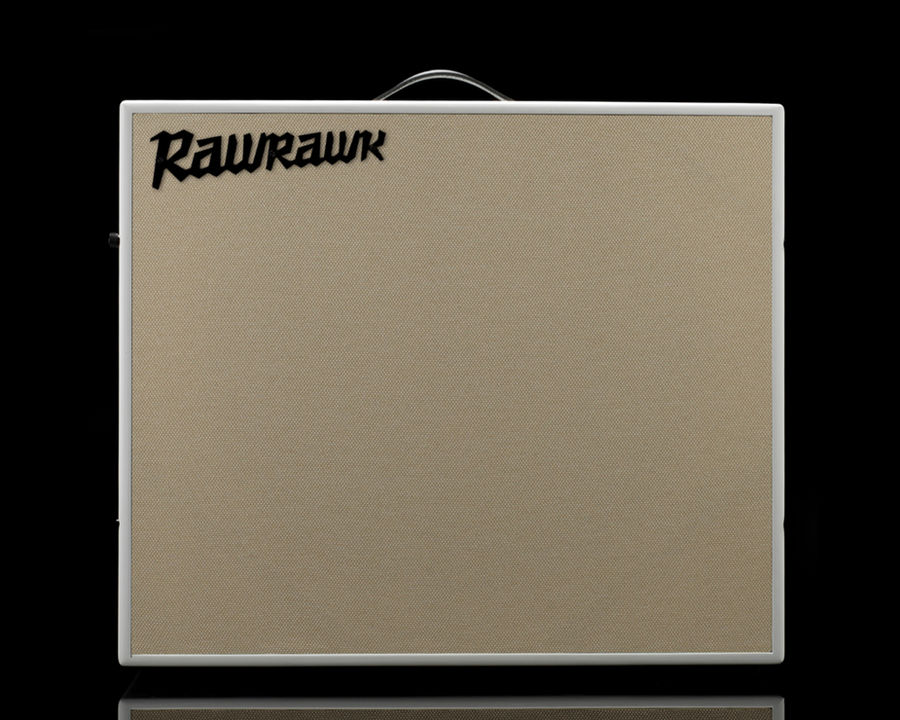
Any fabric in front of a loudspeaker behaves as a porous acoustic layer. Even “acoustically transparent” cloth introduces measurable high-frequency attenuation — typically fractions of a decibel to a couple of dB on-axis in the upper frequencies.
Off-axis, the picture is broader: attenuation can be more pronounced, affecting the sense of openness and air that separates a well-designed cabinet from a merely competent one.
Manufacturing tolerance is not audio tolerance
Textile manufacturing tolerances are not audio-grade tolerances. Weave density varies. Thread thickness varies. Tension during installation varies. Over time, cloth stretches and compresses.
Two cabinets, built to the same specification, with the same speaker and port tuning, can measure differently at the top end solely because of which bolt of cloth was used.
For many manufacturers, that is acceptable. For a cabinet built around acoustic precision, it is a variable worth solving.
Durability over a career
The practical case reinforces the acoustic one. Grill cloth stretches, catches on cases and racks, and shows wear. For a cabinet designed to last the life of a career, that didn’t meet the same long-term standard either.
The Airframe
The solution wasn’t a different cloth. It was no cloth at all.
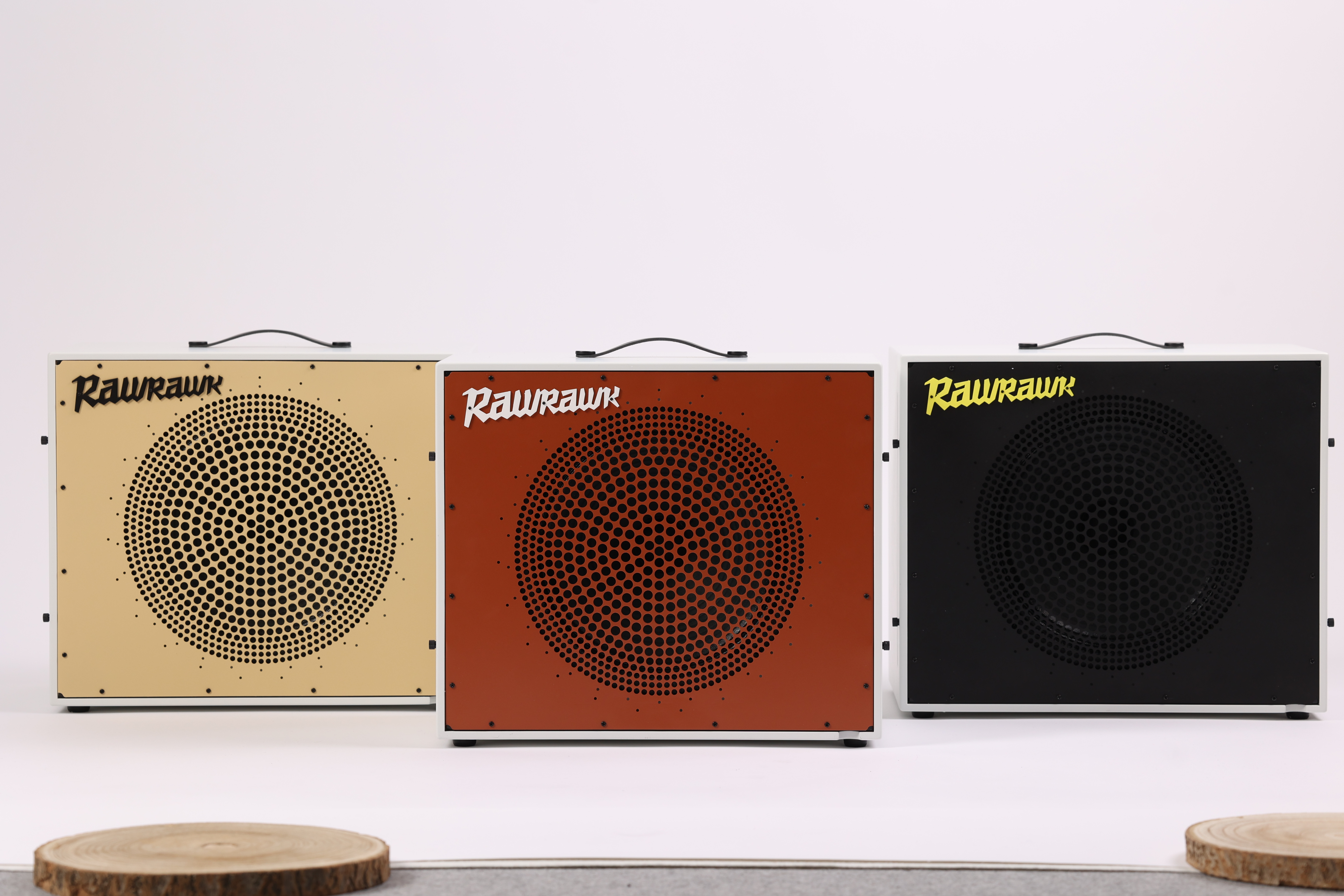
The Airframe is a rigid, precision-machined, powder-coated open structural frame that replaces the grill cloth panel entirely. It mounts flush to the baffle, protects the speaker from accidental contact, and introduces no fabric-based acoustic filtering.
Speaker → Air. No cloth in between.
What it changes
From an engineering standpoint, the Airframe does three things:
- Removes fabric-related high-frequency attenuation
- Eliminates batch-to-batch textile variation
- Prevents long-term stretching or cosmetic degradation
The frame geometry provides structural rigidity without adding meaningful weight. Its open architecture lets the speaker operate without obstruction while still providing physical protection.
Consistency over perfection theatre
A small amount of edge diffraction is inherent to any structure placed in front of a driver. Compared with woven cloth attenuation, the acoustic impact is negligible — and, crucially, it is consistent from unit to unit. Consistency is the point.
If two Quasars are built with the same wood, speaker, and port tuning, they should behave the same. The Airframe helps ensure that.
Look and identity
Aesthetically, it is a different statement. The speaker is visible. The front is architectural. The cabinet becomes more instrument than box — the kind of thing people ask about before you’ve plugged in.
Function and identity align.
TPU corners
While refining the front, we addressed another consideration: corner protection.
Why not metal?
Traditional metal corners are strong, but they rust and deform permanently under heavy impact. Once dented, they stay dented — and can transfer concentrated force into the wood beneath.
Why TPU
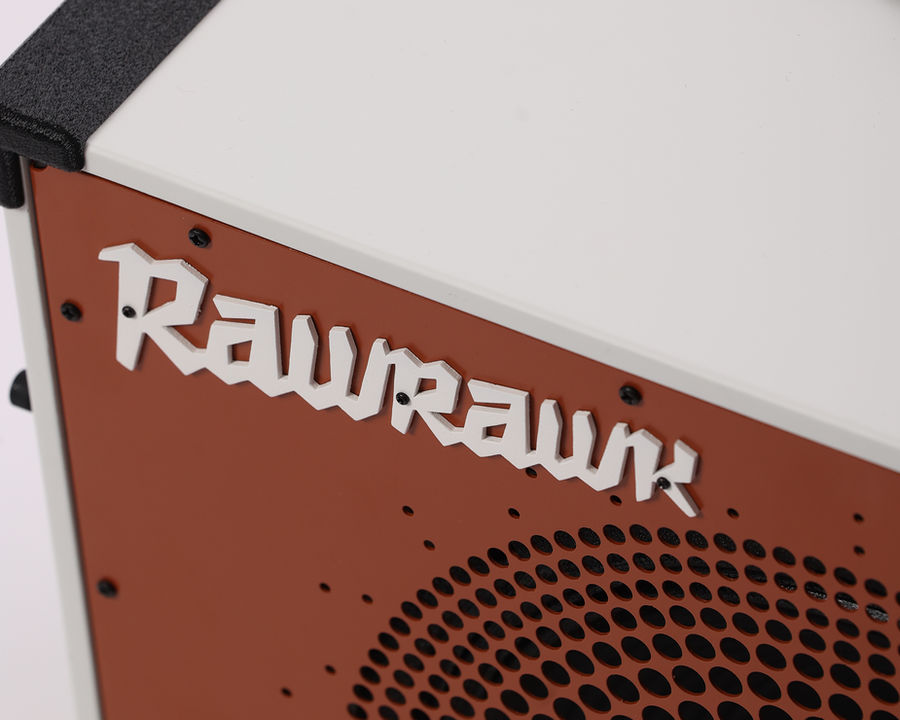
The updated Quasar uses TPU corners — thermoplastic polyurethane. TPU is widely used in protective equipment because it combines toughness with elasticity. Instead of permanently deforming, it absorbs and distributes impact energy, then returns to shape.
For live music, that matters for sharp hits as well as broad impacts: TPU deforms locally around the contact point and recovers. The corner takes the hit so the cabinet doesn’t.
Practical advantages
- Elastic absorption of both broad and sharp-point impacts
- Reduced stress concentration at panel edges
- Lower mass compared with metal hardware
- No rattle
Baltic birch is strongest in panel form and most vulnerable at edges. TPU corners reinforce exactly where impact risk is highest.
Durability should not degrade with use. It should remain stable over the life of the cabinet.
What stays the same
The Quasar’s acoustic engineering, CNC construction, port tuning, and glue-only joinery remain exactly as designed. That foundation was right from the start. The Airframe and TPU corners exist because the same standard eventually had to be applied to these elements too.
This is also what small-batch production with direct control over every component means in practice. Large manufacturers can’t update on a timescale that matters — fixed runs, retail inventory, and supplier lead times mean years can pass before a change ships. When the engineering case is clear, we move.
Several people who wrote to us asked sharp questions about high-frequency response and off-axis behaviour. Those conversations confirmed that the people buying the Quasar are exactly the listeners this cabinet was built for.
This is how products mature: not through marketing cycles, but through iteration, measurement, and a consistent standard applied without exception.
If you have thoughts on what comes next — keep them coming: hello@rawrawk.com
The updated Quasar with Airframe and TPU corners is now in production and available to order.